Decoding a memory-gone-bad

When we form a memory, a specific population of neurons in the brain is activated to encode the event, which is collectively called the “memory engram.” Reactivation of this small population of cells is enough to remember the event, while when we encounter similar contexts, partial activation occurs, allowing us to remember the experience.
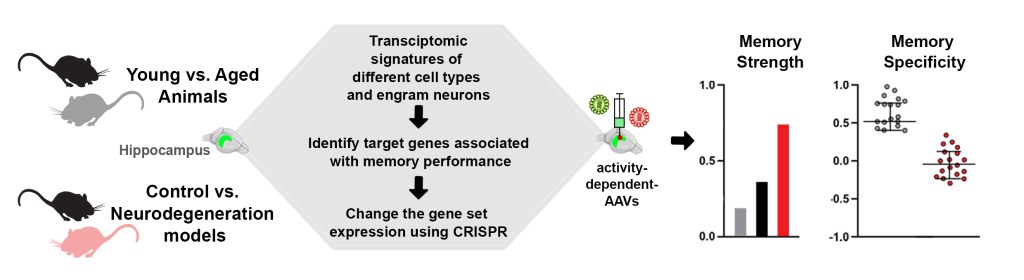
However, factors such as early life stress or traumatic events can disrupt this engram reactivation process and lead to the formation of pathological memory formation that underlies disorders such as PTSD. Our research focuses on identifying the genetic signatures of these pathological memories and investigating whether we can improve individual resilience by precisely editing these genes in the brain.

In addition, age-related cognitive decline and neurodegenerative diseases such as Alzheimer’s disease impair memory performance, also in mouse models, through dysregulation of engram formation and reactivation processes. We will also investigate our identified genetic risk factors from transcriptomics in these models and implement gene silencing/circuit manipulation there to improve memory performance.
 demiray lab